Copyright: TI Bitburger Land
Alley stripper legend
A ruse helps to secure victory against Swedish mercenary troops
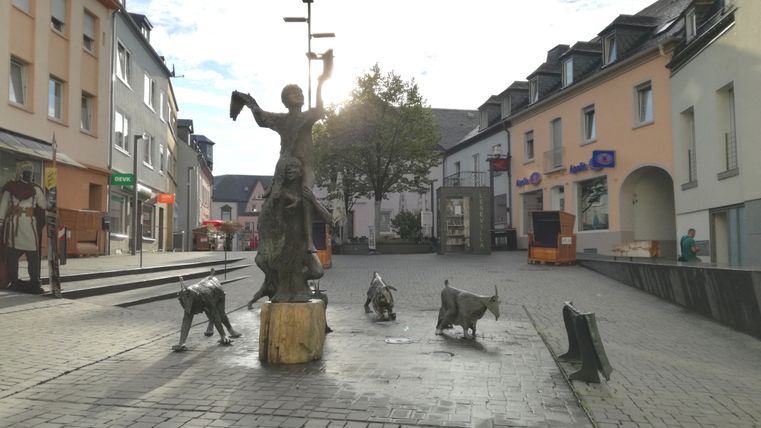
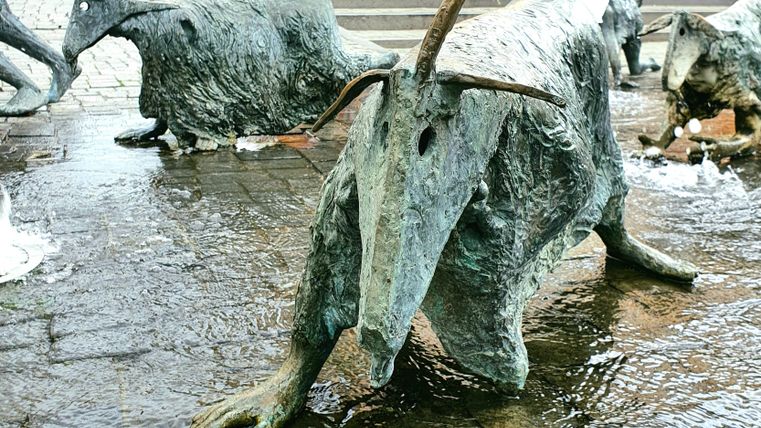
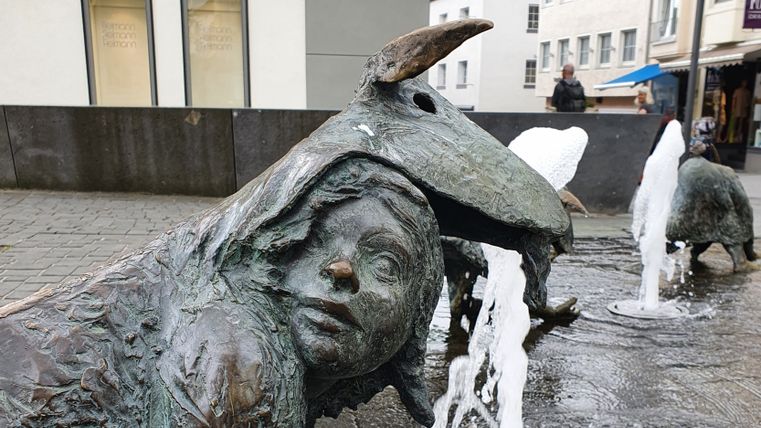
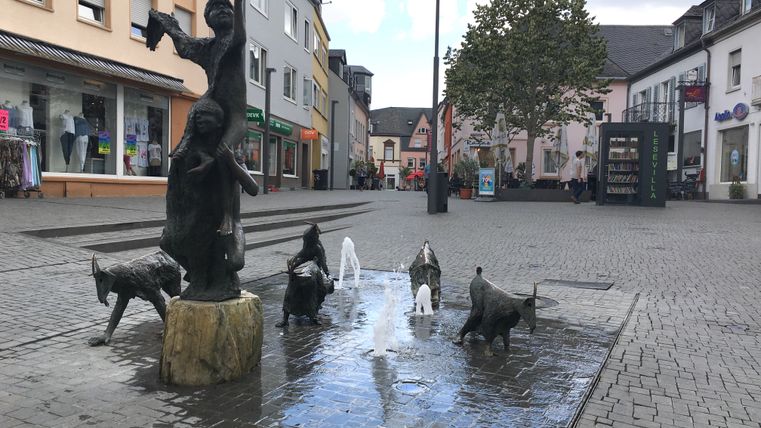
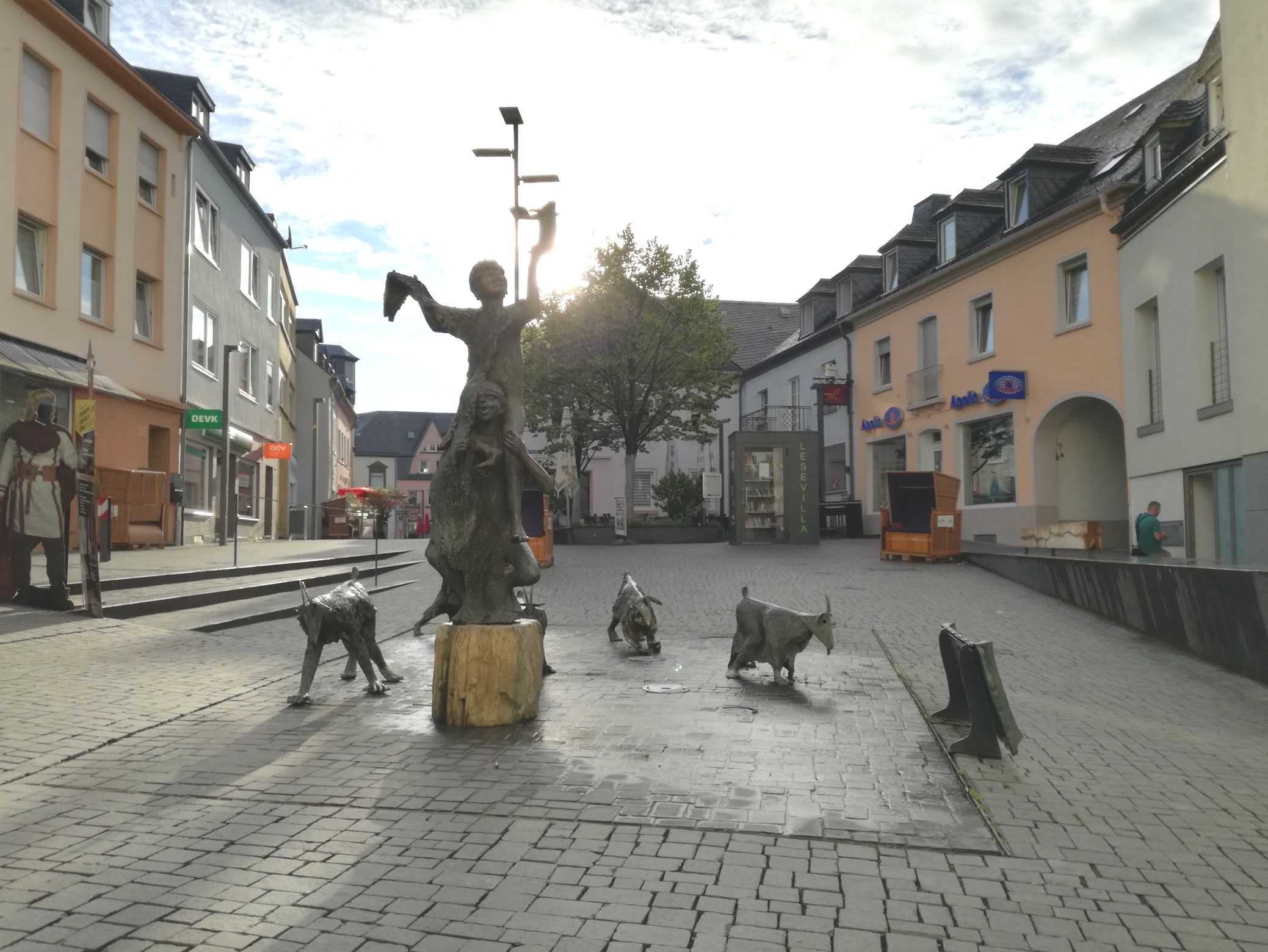
The Gäßestrepper fountain illustrates a town legend that is said to have taken place in Bitburg. During the Thirty Years' War (1618-1648), Swedish mercenary troops besieged the town in order to starve it out. Bitburg's supplies soon ran out and the citizens were on the verge of surrendering. Suddenly, one of them had an idea: they took the skins of the goats that had been slaughtered in the hardship, put them on the children and sent them to the town wall. When the Swedes saw the "goats", they thought that the people of Bitburg still had plenty of food. However, as the Swedes' own supplies were running low, they gave up the siege and left. Since that day, the people of Bitburg have been called Gäßestrepper, after the Bitburg words for goat (Gäße) and überziehen (streppen).